
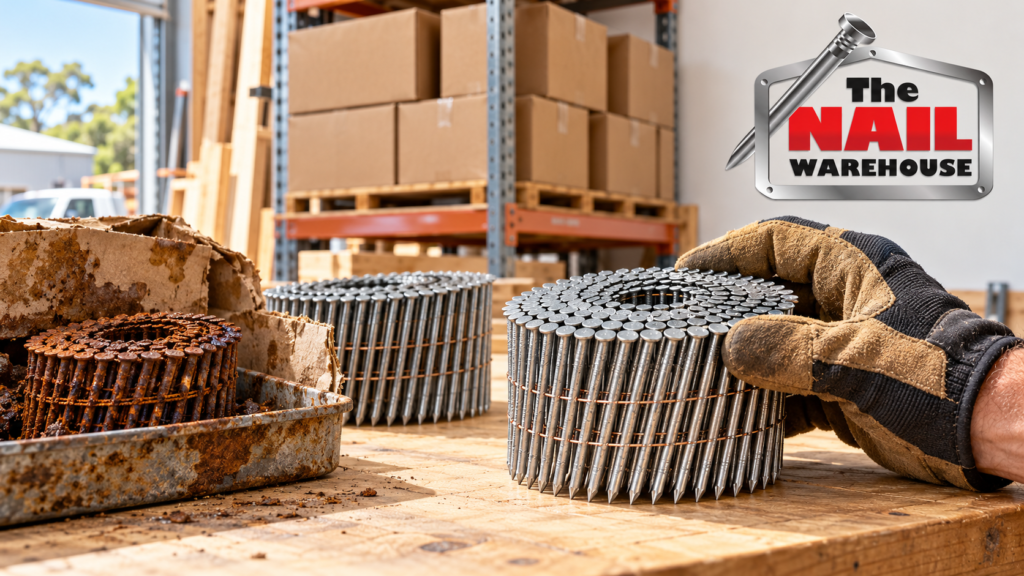
Choosing coil nails in Australia involves more than selecting the correct length, shank type and finish. Storage conditions also deserve attention before the fasteners reach the nail gun.
Moisture, contamination and physical damage can affect the condition of nails and their collation. A crushed coil or corroded fastener may create problems even when its original specification matches the tool.
This guide from The Nail Warehouse explains how to organise storage, inspect stock and identify fasteners requiring further assessment before use.
How Can Storage Affect Coil Nails in Australia?
Coil nails are collated fasteners arranged in a coil for compatible nailers.
Their condition depends on both the individual nails and the arrangement holding them together. Storage should protect the metal, finish, collation and product identification.
Storage Factors to Review Include
- Rain and water exposure.
- Persistent humidity.
- Condensation.
- Salt contamination.
- Dust and grit.
- Chemical contamination.
- Damaged packaging.
- Excessive stacking loads.
- Dropping or crushing.
- Loss of product labels.
SENCO explains that moisture can cause plain steel fasteners to corrode, with salt exposure increasing the concern. Its guidance also distinguishes fastener materials and finishes for different applications. SENCO
Good storage helps preserve the supplied product. It does not make an unsuitable finish appropriate for the installation environment.
1. Identify the Exact Coil Nail Product
Start by recording what is being stored.
Similar-looking coils can contain nails with different dimensions, finishes and application requirements.
Product Details to Record
- Manufacturer or supplier.
- Exact product code.
- Nail length.
- Shank diameter.
- Head configuration.
- Shank profile.
- Collation angle.
- Collation material.
- Nail material and finish.
- Batch reference, where available.
- Date received.
Keep the original label with the stock.
For products purchased from The Nail Warehouse, retain the order information so specifications can be checked if packaging becomes damaged.
2. Protect Coil Nails in Australia From Rain and Water
Choose a covered storage location that protects cartons and open coils from direct wetting.
Proper storage of coil nails in Australia helps protect fasteners from moisture and corrosion.
A roofed area may still expose stock to wind-driven rain, leaking walls or water running across the floor.
Storage Locations to Check
- Areas beneath roof leaks.
- Open-sided sheds.
- Floors near external doors.
- Vehicle trays.
- Uncovered site storage.
- Locations beside washdown activities.
- Shelves below water pipes.
- Areas exposed to flooding or pooling water.
Use suitable shelving or pallets to keep cartons away from wet floors.
If stock becomes wet, separate it for assessment. Drying the packaging does not establish that the nails and collation remain suitable.
3. Protect Collated Coil Nails From Humidity and Condensation
Fasteners can encounter moisture without being directly exposed to rain.
Condensation may form when cold stock enters warmer, humid air. Enclosed storage can also retain moisture after wet equipment or materials are placed inside.
Questions to Ask
- Does the storage area remain damp?
- Is condensation visible on nearby metal surfaces?
- Are cartons soft, stained or damp?
- Are wet materials stored beside the fasteners?
- Does the area experience large temperature changes?
- Is ventilation appropriate for the location?
- Does the supplier specify particular storage conditions?
Avoid inventing one humidity limit or storage period for every product.
Follow product-specific instructions and investigate recurring moisture problems in the storage area.
4. Protect Stock From Salt and Chemical Contamination
Coastal workshops, vehicles and building sites may expose stored products to salt-bearing air or contaminated water.
Chemicals spilled or sprayed near fasteners can introduce additional uncertainty about their condition.
Contamination Sources to Review
- Sea spray.
- Salt-contaminated vehicle trays.
- Wet coastal equipment.
- Cleaning chemicals.
- Timber-treatment chemicals.
- Fertilisers.
- Leaking containers.
- Contaminated shelving or bins.
Store fasteners separately from substances that could damage their material, finish or packaging.
If contamination occurs, identify the substance and contact the supplier for guidance. Do not assume that wiping the nails clean restores their suitability.
5. Keep Coil Nail Packaging Intact and Labels Readable
Packaging helps contain and identify the product, but it should not be assumed waterproof.
Check cartons when stock arrives and after it has been moved.
Packaging Checks to Complete
- Cartons are dry.
- Seams and closures remain intact.
- Labels are readable.
- Product codes match the order.
- There are no signs of crushing.
- Contents have not spilled.
- Different products remain separated.
- Any storage instructions are retained.
For opened cartons, use suitable clean storage that protects the remaining coils and preserves identification.
Avoid transferring several similar products into an unlabelled container.
6. Prevent Coils From Being Crushed or Distorted
A coil must retain the arrangement required by the nailer’s magazine and feed system.
Dropping cartons, stacking heavy materials on them or forcing coils into small containers can damage that arrangement.
Handling Details to Review
- Carton stacking instructions.
- Shelf load limits.
- Placement of heavier stock.
- Protection during vehicle transport.
- Suitable lifting and carrying methods.
- Condition after a drop or impact.
- Coil shape before loading.
Set aside visibly distorted coils.
Do not bend nails, reshape collation or force a damaged coil into a magazine to make it fit.
7. Keep Nails and Collation Free From Debris
Open cartons can collect sawdust, grit and other site debris.
Contaminated stock can introduce unwanted material into the nailer’s feed area.
Practical Controls Include
- Keeping opened stock covered.
- Using clean, labelled containers.
- Storing cartons away from cutting dust.
- Avoiding direct placement on the ground.
- Keeping fasteners separate from oily tools.
- Inspecting coils before loading.
- Following the tool manufacturer’s cleaning instructions
Do not apply oil, solvent or rust treatment to coil nails unless the relevant manufacturer expressly permits it.
A product applied to the nails could affect their coating, collation or interaction with the tool.
8. Inspect the Finish Without Assuming Appearance Proves Suitability
Review nails for changes in condition before use.
Before using coil nails in Australia, check for rust, damaged collation and signs of moisture.
Visible rust, deposits or coating damage require attention, but appearance alone cannot establish the remaining corrosion protection or connection performance.
Condition Factors Include
- Red rust.
- White deposits on zinc-coated products.
- Flaking or damaged coating.
- Pitting.
- Bent shanks.
- Damaged heads.
- Contaminated surfaces.
- Loose or broken collation.
- Unexplained changes after storage.
Different materials and finishes may have different surface appearances.
Separate questionable stock and request product-specific guidance. Do not assume that light discoloration means structural failure, or that a clean appearance proves the product meets every requirement.
For structural work, follow the approved fixing specification and obtain appropriate assessment where fastener condition is uncertain.
9. Rotate Stock and Maintain Traceability
A stock-rotation process helps prevent cartons from being forgotten at the back of a shelf.
Using older suitable stock first can be practical, but condition and product requirements still take priority.
Stock Information to Maintain
- Product code.
- Receipt date.
- Batch reference, where available.
- Storage location.
- Quantity remaining.
- Packaging condition.
- Reported exposure or damage.
- Inspection outcome.
- Supplier advice received.
- Final disposition of rejected stock.
Do not create a universal expiry date for coil nails without supporting product information.
Follow any manufacturer-defined storage limits and review condition before use.
10. Check Fasteners and Tool Compatibility Before Loading
Storage checks should form part of the preparation process.
Even undamaged stock must match the nailer and the application.
Initial Checks May Include
- Correct product code selected.
- Length within the tool’s accepted range.
- Shank diameter matches the specification.
- Correct collation angle and material.
- Suitable head configuration.
- Coil remains undamaged.
- Nails are clean and free from concerning corrosion.
- Finish matches the job requirements.
- Magazine and feed system are in suitable condition.
- Manufacturer loading instructions are followed.
Isolate the tool’s power source as directed before inspection, adjustment or clearing a jam.
Stop if the tool repeatedly misfeeds. Do not increase operating pressure beyond manufacturer limits to overcome damaged or unsuitable fasteners.
A successful trial drive does not establish the strength or durability of the completed connection
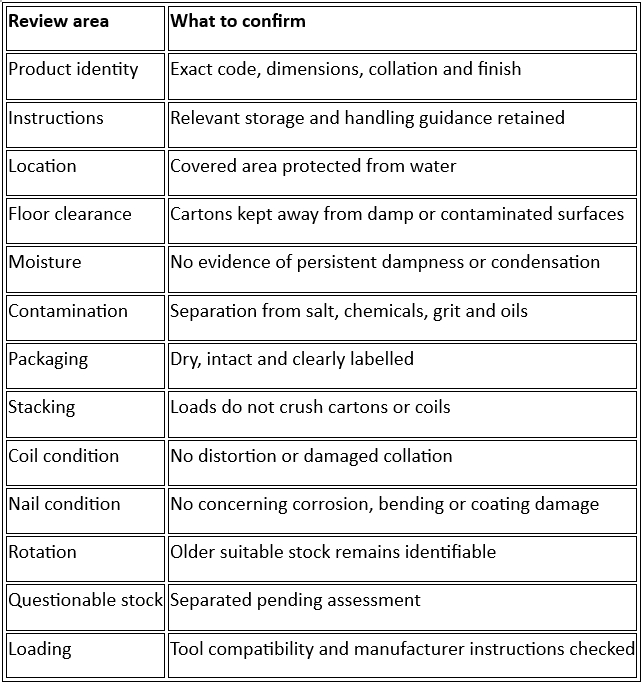
A Storage Checklist for Coil Nails in Australia
Hypothetical Example: Reviewing Two Stored Coil Nail Cartons
A contractor finds two cartons of the same coil nail product before starting a job.
One has been stored on a dry workshop shelf. The other has remained in a vehicle where its packaging became wet and crushed.
The shared product code does not establish that both cartons remain in equivalent condition.
Carton A Review
- Confirm the product label.
- Inspect the packaging.
- Check representative coils for damage or contamination.
- Confirm the finish suits the job.
- Compare the specification with the nailer manual.
Product B Review
- Separate the affected stock.
- Record the water exposure and physical damage.
- Inspect without loading the coils into the tool.
- Photograph any corrosion or distortion.
- Request supplier guidance on suitability or replacement.
This example is illustrative. The appropriate decision depends on the product, exposure, observed condition and application.
Common Mistakes to Avoid
Assuming a Covered Shed Is Always Dry
Check for leaks, wind-driven rain, condensation and damp floors.
Treating Galvanised Nails as Immune to Storage Damage
Protect the product and verify its condition regardless of the finish.
Drying Wet Cartons and Returning Them Directly to Stock
Assess the nails and collation as well as the packaging.
Mixing Similar Coils in Unlabelled Containers
Retain product identification to prevent specification errors.
Reshaping Damaged Coils
Set questionable products aside rather than forcing them into the nailer.
Ordering From The Nail Warehouse
When ordering coil nails in Australia from The Nail Warehouse, confirm the complete fastener specification and ask about any product-specific storage requirements.
Before ordering, provide:
- Your nailer manufacturer and model.
- Required nail length.
- Shank diameter.
- Collation angle and material.
- Required head configuration.
- Specified shank profile.
- Timber type and treatment.
- Installation environment.
- Required material or finish.
- Quantity.
- Delivery location.
- Expected storage arrangements.
Explore The Nail Warehouse product range and confirm specifications, availability and delivery details with the team.
If existing stock has been exposed to water or contamination, provide photographs and product identification when seeking advice.
Final Thoughts
Storing coil nails in Australia requires attention to moisture, contamination, packaging and physical handling.
Keep stock dry, clean, protected and identifiable. Inspect coils before loading and separate products showing corrosion, distortion or uncertain condition.
When purchasing from The Nail Warehouse, confirm the product specification and applicable storage guidance. Suitable storage helps preserve fasteners until they are needed, while correct selection remains essential for the tool and the job.
Explore The Nail Warehouse product range to compare coil nails and related fastening products.
